
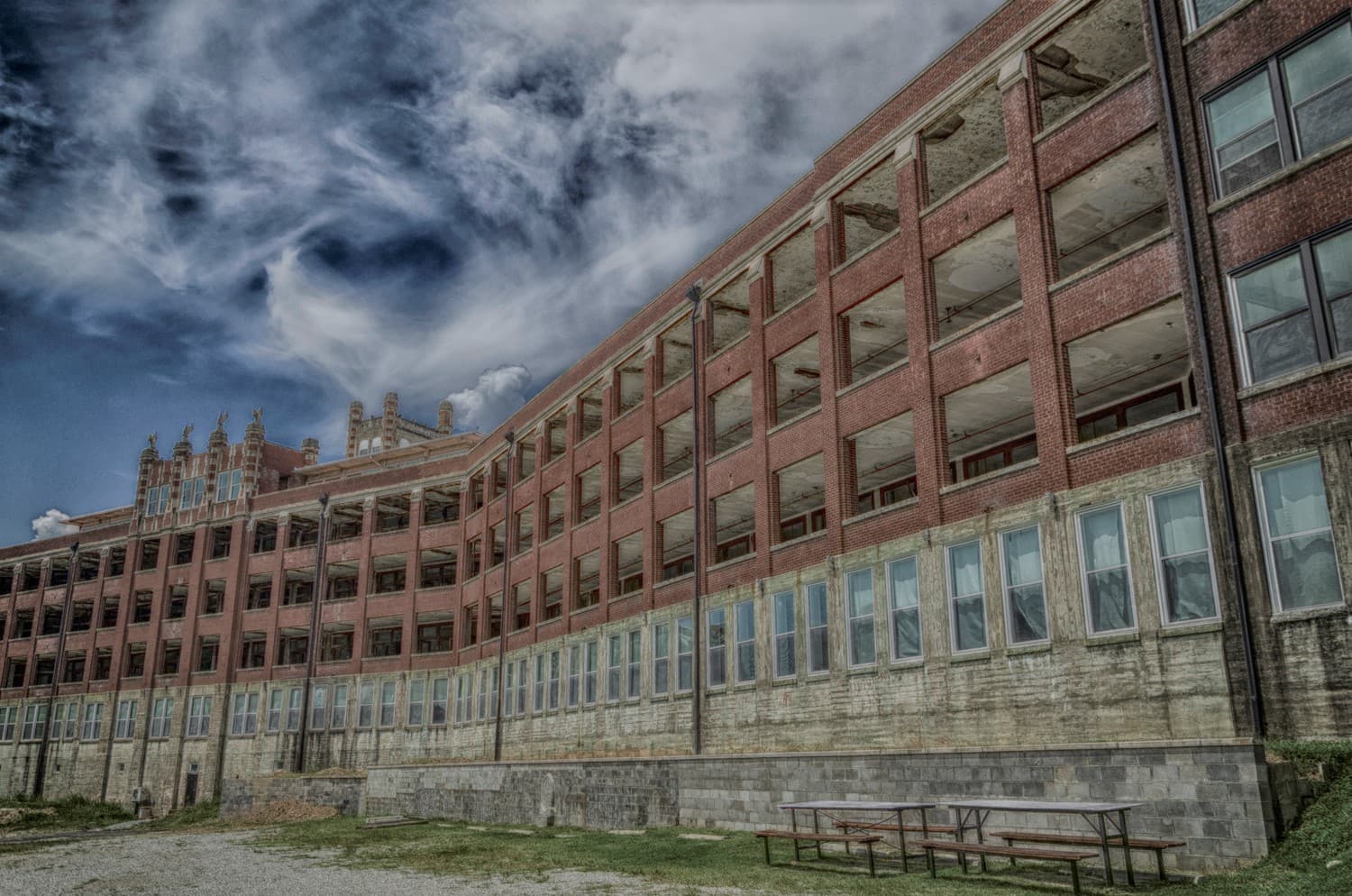
Inside the Waverly Hills Investigation: What the Cameras Didn't Show
The live Halloween special gave viewers six hours. What it didn't show was the 14-hour setup, the methodical debunking process, and the three pieces of evidence we ultimately couldn't explain.
Television gives you six hours. The actual investigation took three days. That gap — between what viewers see and what we actually do — is something I've never been fully comfortable with, which is why I want to write about Waverly Hills the way it actually happened.
The Setup Nobody Sees
We arrived at Waverly Hills Sanatorium on October 28th, two days before the live broadcast. The building is 500,000 square feet spread across six floors, and every one of them required a full sweep before we placed a single piece of equipment. That sweep alone took eleven hours.
During those eleven hours, our team catalogued every known environmental factor: HVAC vents and their draft patterns, structural settling points, areas of known animal activity — bats have historically roosted in the fourth-floor corridor — natural lighting bleed through sealed windows, and the resonance frequencies of the long corridors, which can produce unsettling auditory effects at certain wind speeds.
We mapped all of it. We also identified fourteen spots where equipment placement would produce false readings due to proximity to electrical panels, load-bearing wall conductors, or the building's aging plumbing. Fourteen spots that, if we hadn't checked, would have generated compelling-looking data with completely mundane explanations.
“Good investigation is mostly elimination. If you haven't ruled out the rational, you haven't done the work.”
The Debunking Process
The room-by-room debunking process at Waverly is exhaustive. The building's history — roughly 8,000 deaths during its tuberculosis sanatorium years, though the figure is often exaggerated in popular coverage — means there's enormous psychological priming happening the moment investigators walk through the door. That priming is our first obstacle, not the building.
Room 502 is the most cited location at Waverly, associated with the alleged suicides of two nurses. Whether those deaths actually occurred as described is historically contested — the documentation is incomplete. What isn't contested is that every investigator who walks into that room arrives already expecting something to happen.
Our approach there was the same as everywhere else in the building: establish a baseline, note all environmental variables, and then work for several hours before drawing any conclusions. We captured a door moving on camera in Room 502. Before it could become evidence of anything paranormal, we spent ninety minutes testing whether air pressure differentials from the corridor could produce the same movement. They could. We documented that and moved on.
Field Note
Field Note: The 'Death Tunnel' on the lower level, where bodies were transported during the sanatorium years, produces strong infrasound readings at certain times due to its length and the pressure difference between the tunnel entrance and exit. Infrasound below 20Hz is associated with feelings of dread and unease in humans. We measured it. We noted it. We marked that zone accordingly.
Three Things We Couldn't Explain
After three days, eleven investigators, and more than forty hours of collective field time at Waverly, we had three pieces of evidence we couldn't attribute to any documented environmental or human cause.
The first was an audio capture on the fourth floor at 2:14 AM — a voice, clearly audible, saying what sounds like a name. No investigators were on that floor. All team members were accounted for. The building was sealed. We reviewed all possible sources for that recording — radio bleed, frequency artifacts, the recording equipment itself — and could not reproduce it or explain it.
The second was a thermal anomaly on the third-floor corridor: a cold mass, approximately the shape and size of a human torso, that appeared on thermal imaging for approximately four seconds and then dissipated. Air temperature in the corridor was consistent before and after the event. The building's HVAC was not active in that zone at that time.
The third was a K2 meter response in the solarium that corresponded precisely — three times in succession — with direct yes/no questions. The K2 registered field spikes that matched question timing with a consistency that was statistically notable. We could not locate an electromagnetic source that would produce that pattern.
“Three pieces of unexplained evidence out of three days of work. That's not a haunting. That's a location that warrants continued investigation.”
What the Broadcast Showed
The live broadcast on Halloween night ran six hours. It showed the audio capture, the thermal anomaly, and part of the K2 session. It didn't show the eleven hours of environmental mapping. It didn't show the ninety minutes we spent debunking the Room 502 door. It didn't show the fourteen equipment placement corrections.
That's the nature of television. What it showed was accurate. What it didn't show was the foundation that made those findings credible. I wanted to put the foundation on record somewhere, which is why this post exists.
Waverly Hills is a significant location. It deserves rigorous investigation, not theater. We tried to give it that, and we'll be back.